
Walking Dinas Head, Pembrokeshire
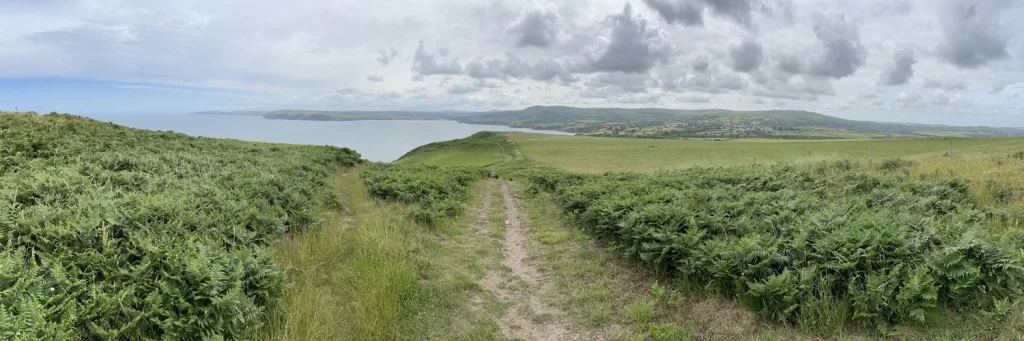
A short but stunning walk around the coastline of Dinas Head following the Wales Coast Path, with great views out to sea and of nesting seabirds, before returning via a flat, tarmac path through sheltered woodland. Activity type: Walk (but it would also make a fun trail run) Distance: 3 miles approximately Elevation: 169 metres (554 feet) of climbing (see Strava elevation for full profile) Accessibility: No styles, some sections are reasonably steep and have steps (see walk notes at the end for more info.) Route type: Circular Start/finish point: Car park at Cwm-yr-Eglwys, Pembrokeshire. Click View on Strava to check out the route and download the GPX file of the walk here. The steep road narrowed as we drove down into Cwm-yr-Eglwys, meaning Valley Church. The lane felt even more claustrophobic driving in late June as the hedgerow greenery leaned inwards until it touched the van on both sides. It reminded me a little of watching those Tour de France cyclists riding through an ever-narrowing tunnel of bodies on their exhausting Alpine ascents. It was early on a Monday morning, still term time, so the car park was almost empty except for one or two cars. As soon as we stepped outside, two things immediately came to our attention, a cold wind whipping off the sea and what looked like some sort of monument. Or was it a church or chapel of some kind? We donned a few extra layers – a shock to the system after such a warm day the day before – and dressed Lennie in his colourful new raincoat. Wandering past the inland boatyard with its small dinghies and the odd sailboat, the wind brought the familiar sounds of rippling cloth and the gentle clanging of buoy bells. Behind the boats, a gate led us through into a graveyard and what was obviously then the remains of a small church, now just a single wall topped with a tiny belltower and weather vane. An information board informed us that this had once been St Brynach’s, a 12th-century church, but two storms in the mid-19th century had washed away firstly much of the graveyard and then, in the great Charter Storm of 1859, most of the church as well. Just a few feet beyond the church, a small stone wall separated it from a fabulous little beach, benches offering a tranquil spot to sit and stare out to sea from the tiny, rocky cove. The scene was beautiful but also tinged with sadness, and the cold wind whipping in was a reminder that on worse days this narrow inlet would, and clearly had, acted as a funnel through which the wild weather reached the shore. Reading up about the village, it seems many villagers abandoned the place after the great storm. In more recent times, the desire for holiday homes in picturesque spots such as this meant that only one or two of the houses were now owned by people who lived there. For all its sadness and challenges, it remained a place of unquestionable beauty. Ferns as high as your head. Follow the acorns. Secret beaches perfect for pirates and smugglers. All that climbing was tiring! Views up top. The path winds on. I see the sea! And more sea! On the summit of Pen y Fan. After exploring the church ruins, it was time to get going. The route was a fairly easy one, taking the Wales Coast Path up and all the way around the headland. All we need to do was look for the familiar acorn signs that you’ll find on all national trails and walk. The climb started instantly as we left the village, weaving our way up through a sheltered gully with ferns higher than our heads lining the path on either side. Out of the wind and climbing continuously, we were soon too warm and the extra layers were quickly shed. Through gaps in the greenery we were treated to great views out beyond the cove to tiny, inaccessible beaches, the cliffs of the coastline snaking in and out into the distance, and beyond to the rugged hilltops of the Preseli Hills. The climb was definitely worth it though. A few minutes later, we were up on open heathland, the ferns up here a more normal height, fronds tickling your kneecaps as you brushed by. From here we had a panoramic view out to sea and along the coastline. The path clung to the side of the hills and cliffs, although it looked as if it may have been moved inland once or twice over the years as the wind and salt water had satiated its appetite for land, nibbling its way steadily into Wales. A little way along, Needle Rock towered upwards just a few metres out to sea. The stack was inhabited by thousands of nesting gulls and black and white sea birds, possibly razorbills or guillemots. A lack of binoculars and ornithology skills means I can’t confirm which. It could well have been both. The noise was deafening, the seabirds cackling like a coven of witches as we trod the path carefully towards the rock. The birds nesting and chatting up on Needle Rock. Past Needle Rock, the path continued to climb until we reached the summit and the furthest point of the headland at Pen y Fan. At 142 metres it’s not quite as high as its famous mountain cousin of the same name in the Brecon Beacons (now known by their traditional Welsh name, Bannau Brycheiniog), but it still offers fantastic views eastwards back towards Needle Rock, which now, from above, looks more like a tiny pimple, and west across Fishguard Bay to its eponymous ferry port. (Pen y Fan, by the way, means something along the lines of ‘top of this place’, hence why you’ll find quite a few of them around Wales.) The descent to Pwllgaelod began gently but became steeper as the path wore down into the earth until we
Searching for the mouth of the Frome: An adventure in 60 minutes
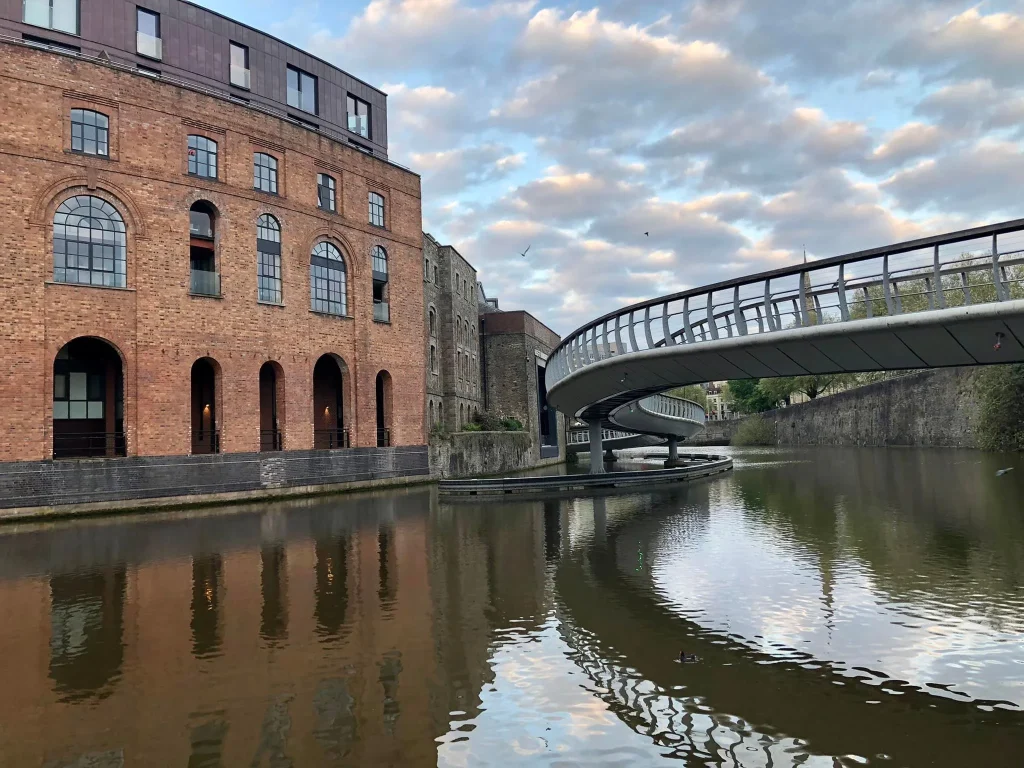
The choir were in full voice as we left the house in the soft morning light. Sparrows, robins, blackbirds, blue tits, and many more that I don’t (yet) have the skilful ear to pick out. One day, hopefully. To our right, the sky lit up pink over the southern tips of the Cotswold Hills as we drove into Bristol – like a giant bowl of Angel Delight. It was 5:30 am and the sun was already peeking out over the horizon. A clear sign that British summertime has arrived, in daylight terms at least. Increasing temperatures are sure to follow but, as I wished Lou goodbye for an hour whilst she took her final PT session before going on maternity leave, the air was crisp and chill. I had already set aside those 60 minutes for a short adventure, a quest to seek out the mouth of the River Frome. Hardly an adventure to rival Livingstone or Speke’s quest for the source of the Nile, but one I’ve been keen to put to bed for some time. I’ve walked and run the length of the Frome on a number of occasions. I’ve picnicked at the very spot where it emerges from the earth – revealing itself as a tiny stream next to an old oak tree on the western escarpment of the Cotswolds in the large Dyson country estate – the trickle of water clear enough to fill your bottle from. I’ve followed it as it meanders Bristol-bound, at times a millpond, a swamp, or a raging whitewater as it crashes this way and that over jumbles of boulders in narrow, steep-sided gorges. I’ve hugged its contours as it rolls into suburbia and through the beauty of our old backyard, before being tamed by mankind in its later stretches. Long abandoned quarries and mills reveal its industrial past but now, foliage grows wild and free, deer quench their thirst in the early morning, herons wade slow-motion in the shallows, and a blur of orange and blue tells you that a kingfisher has just darted its way upstream. As it enters Bristol, humankind’s attempts to tame it are evident. After the beauty of Oldbury Court Estate, Snuff Mills, and Eastville Park, the river oxbows around the edge of Tesco and Ikea before being imprisoned below the concrete pillars of the M32. It reappears again briefly on what was presumably once a little country lane, now a pedestrian and cycle route into the city centre just a stone’s throw from the motorway. It’s here that I pick it up, the coots calling out as they gracefully weave their way in between old trolleys and tyres. Following the route of the river with my eye, I see the office towers of the city bathed in golden light as the sun makes it mark on the world for the first time that day. Or on our bit of the world at least. A short way along the river enters a tunnel underneath the city but the path stays above ground. After crossing the road, I pick up River Street, so I know the waters are still flowing somewhere beneath my feet, imprisoned by a wall of bricks and concrete. At the end of River Street, I cross the usually busy main road, still quiet before the rush hour hum, and enter a deserted Cabot Circus shopping centre. It’s as if I’ve stepped into a zombie apocalypse movie, the only sound and movement from the occaional pigeon or seagull. There’s a strange beauty to this cityscape that’s amplified by the lack of activity. The sharp edges of the towering buildings. The vast quantities of plate glass, still inky black as the sun hasn’t yet penetrated this manmade gorge. The dark glass stands in stark contrast to the bright neon lights of the shop signs that do their job by drawing your eye, although I couldn’t shop if I wanted to as the world is yet to join me in this cathedral of commercialism. I exit the shopping centre, the only sign of life a lone street cleaning cart, whirring away and momentarily breaking the silence. The modern buildings are occasionally interspersed with delightful titbits of history, the architectural joy that is the Klosterhaus cafe, housed in an 18th century Quaker meeting room, and the grand colonial-style almshouse that now houses Jack Wills clothing rather than those in need of shelter. Before long, I’m in the green surroundings of Castle Park and the noise of the street cleaner has faded into the distance. I’ve been here before when I’ve started my Frome River walks and runs, but I’ve never seen its final moments of existence before it ceases to be and its molecules of water are magically transformed in an instant into the River Avon. I wander through the ruins of St Peter’s Church, bombed during the Second World War and now surrounded by a beautifully maintained flower garden with water features and benches that serve as a great spot for quiet contemplation or just a morning coffee. Past the last remaining foundation stones that once formed part of the great castle that once stood here and give the park its name, and the more impressive vaulted chambers tucked away in a corner behind a small green knoll. I know I’m close and I make my way down to the waterside, standing on a pontoon underneath the impressive modern architecture of the serpent-like Castle Bridge, a recent addition to lead pedestrians off into a refurbished industrial quarter now brimming with apartments, micro-breweries, and restaurants. A few more people are appearing now, smartly dressed early starters slowly filing into the surrounding offices. I look for evidence of the river that once acted as one side of the castle moat but all I can see are a few little inlets that seem to go nowhere. Running out of time and thinking that the final few feet of this river that I know so well will once more
Going roamin’ with Romans: Preparations and our equipment list for walking Hadrian’s Wall
With just a few days to go until we’re off on our coast to coast walking adventure, following the 84-mile long Hadrian’s Wall, I thought I’d share a little bit about our planning for the trip. The former defensive stronghold and customs post runs from its eastern limit at Wallsend (no prizes for guessing where that name originated) in Newcastle upon Tyne, to Bowness-on-Solway in the west. Decisions Before anything else, we had to decide how we were going to travel and sleep. Were we going to head west to east, or east to west? Would we camp or use hotels and B&Bs? And, how long did we want to take? Looking through various web pages and guidebooks, starting at Newcastle and heading west seemed the favoured route. Why? Because the Newcastle section is fairly built up and it seems, understandably, some people find finishing in a city a bit of an anti-climax. It feels more adventurous to leave civilisation and head off into the wilds. We also know from experience that it can be quite hard to adjust back to a life surrounded by other humans after being out on the trails for a while. So we knew where we would begin and end. Now to work out how to travel between those two points. Camping would probably always be our preference. It’s more adventurous, you’re much better connected with nature and the environment around you, and it’s a hell of a lot cheaper too! That said, we knew we were going to be setting off fairly late season and camping means carrying a lot more weight in your bags. We also knew that whilst this was supposed to be an adventure, it was also our main holiday of the year and we had to strike the right balance between challenge and relaxation. In the end, we went for a mix of traditional B&Bs and AirBnB. Less grandiose than some of the lovely hotels we’d seen along the way, but considerably closer to our preferred budget, whilst providing the comfort that would enable us to make it a holiday and not simply a test of physical endurance. Please forgive us if you feel that our decision isn’t in keeping with the spirit of true adventurers. We believe that adventure can and should be for everyone and that it’s up to each person to decide how far they want to push themselves. Our final decision. How much yomping to do each day? We’ve done a fair number of hikes between 10 and 13 miles this year with Lou’s mum whilst ticking off legs of the Cotswold or Mendip Ways, so we figured pushing up to an average of 14 miles wouldn’t be too much of a stretch. 84 miles, the total distance of the wall, divided beautifully evenly into six days of 14 miles (although some will be around 10 or 11, whilst others will be more like 15). What to take with us? With no camping on route, we could obviously ditch the tent, sleeping bags, inflatable roll mats and pillows (much to the gratitude of our shoulders). Having never done more than a couple of days of hiking back-to-back before though, we thought we’d check out a few blogs and websites to see what was suggested. Here’s a link to a blog post I came across with a fairly thorough kit list: What To Take On A Day Hike In The UK? (+ What NOT To Take) – Becky the Traveller And, after much consideration, here’s our final list of essentials for the trip: Hiking boots – good quality, waterproof ones that combine comfort with decent ankle support. Rucksacks – we had to head out and get some new gear for this. I had a rucksack that is perfect for day hikes, but just too small for multiple days on the trail, whilst Lou had a giant rucksack that we just didn’t need (unless she was intending on carrying me)! In the end, I opted for this 35-45-litre one from Go Outdoors. Walking poles – for a little extra power. A pair of shorts and a pair of trousers. I have the ones that zip off at the knee for added flexibility and to lighten the load. 2 x technical t-shirts to reduce sweating. A long-sleeved top (one of my many ‘you didn’t get into the London Marathon this year’ ones. Waterproof jackets and trousers – being wet and cold is miserable and, as we’re headed to the north of England, we are taking no chances! Smartwatches – partly to track the distances, but also because they give us portable compasses if needed too. Smartphones with the OS maps app – I pay £24 a year to get access to OS maps for the whole of Britain on my app. I can add the app to multiple devices and, best of all, pre-plan routes and download them to use offline in case there’s no signal. An absolute bargain!!! Plus, the phones are our cameras for the trip so that we can share our beautiful adventure with you. First aid kit – just one of the little portable ones with bandages, plasters and scissors. Emergency bivvy bag and a whistle – because it’s always best to be prepared. Suntan lotion, after sun, and chaff cream – comfort is everything. Baseball cap and woolly hat – welcome to Britain! Thin gloves and waterproof gloves – cold, wet hands aren’t fun. Pants and socks, including waterproof socks – and neither are cold, wet feet! Snacks – flapjacks, Trek bars, fruit, crisps, or whatever takes our fancy for the day ahead. One outfit for evening wear with a light pair of shoes – because tonight’s pub won’t know I wore it yesterday too! 😉 Roman Centurion outfit – too much??? I considered taking head torches and a portable charging kit but, when I checked out the route, I could see that we’re never too far from a road and the lengths
Four simple habits to boost your energy levels

One of the most common goals I work on with clients, and something that will definitely have its own page on the new-look website, is boosting energy levels. Feeling tired, lethargic, and lacking that spark for life is something that is all too common these days, and it’s often down to a host of factors. Here are four healthy habits, one each from the think, eat, live, move elements that form the balance method, to provide you with a truly holistic approach to putting that spark back in your life and a spring in your step: 1. Think: Get checked out If you’ve been feeling low on energy for some time, before you do anything else, have a chat with your GP. It’s important to rule out common medical causes of fatigue or, in some instances, to diagnose the issue and begin to take appropriate actions. 2. Eat: Small and often (and healthily) Nutrition can play a powerful part in boosting (or crashing) your energy levels. Food contains calories after all, and it’s that energy that you need to make every aspect of your body function optimally. But it’s not just calories that are important. Many nutrients play a role in providing and delivering energy to your body and mind, whilst refined foods and stimulants can have a negative impact. Before you get overwhelmed by what to focus on though, try this simple technique first: Eat smaller healthy meals with a good source of protein (think chicken, fish, nuts, seeds, peas, beans, or legumes) more often. This advice comes straight from the Harvard Medical School, and it’s based on the knowledge that smaller meals can prevent you from getting those big energy spikes after eating, followed by that even bigger slump. Eating small and often, including a good source of protein, can help to better regulate your blood sugar levels. It also prevents too much blood from being diverted away from your brain and muscles to your stomach (to digest the large meal you’ve just eaten), keeping you more alert as a result. 3. Live: Establish a sleep routine If there’s one thing you can do quickly to improve your sleep, it’s to practice going to bed and getting up at the same time EVERY DAY. Yep, that means weekends too. It helps to reset your body clock (fancy name, Circadian Rhythm), which manages your energy levels, alertness, and all of your major bodily functions throughout the day on a set timer. Do the same things each day and you help it to literally get into its rhythm, leaving you tired when you should be, and full of beans when you need it too! 4. Move: Feeling tired? Go for a walk Research has suggested that a short, gentle walk outside (just 20-30 minutes) may be more effective for boosting your energy levels than a nap, using stimulant substances like caffeine, or even stimulant medications. Why? It doesn’t seem to make sense, does it? When you’re tired, doing exercise should surely make you even more fatigued. But, much of how energetic you feel is to do with your hormones, and gentle exercise is brilliant for balancing them. Being stressed all day can lead to constantly high levels of adrenaline and cortisol, but moderate activity can help to bring these down, whilst at the same time boosting levels of feel-good hormones. The result: more energy. Oh, and better sleep too, which will give you even more energy. And better blood sugar control, which…you get the idea! More energy!!! Getting outside and active early in the day seems particularly effective but, as long as you’re not pushing yourself hard too late in the day (when it can delay sleep), being active at any time can help you to feel more lively. Make a change the balanced way If increasing energy is your goal, pick just one of the four tips above to work on this week. Start small. Be consistent and don’t be afraid to ask me for help if you need it. I’ll be happy to chat and offer advice to help you find your balance.
Seven amazing things we’re taking you to see next year
If you didn’t see it, yesterday I posted a sneak preview of all of the events we have planned for next year. One of the things we pride ourselves on is taking you to see beautiful views, places that inspire awe and wonder. Sometimes, they’re miles from anywhere, but at others, they’re literally on your doorstep and you may pass them daily without giving them a second glance. We’ve got so much lined up for you, here’s a glimpse of what’s in store… 1) Castles and fortresses We’ll cross Offa’s Dyke, the 50-mile long earthwork defence built by the Mercian king of the same name, at both its southern and central points, giving you amazing views and a good sense of how powerful his kingdom was over 1,200 years ago. We’ll also pass fortresses and residences in various states of repair, from castellated stately homes like Cyfartha Castle in the valleys of Wales, to grand but well preserved ruins like those at Chepstow, towering above the Wye as it does, right through to those now clinging on to their few remaining stones like Montgomery and Newport Castles, but no less impressive for it. Chepstow Castle’s grand entrance 2) Places of worship As well as castles, you’ll get to see how religion has shaped our lands for centuries, from Wells cathedral, making the city the smallest in England, to neighbouring Glastonbury Tor, fabled for its connections to Arthurian and Grail legend. Have lunch next to Tintern Abbey, a once great and powerful monastery sitting on the banks of the Wye and many others besides. The imposing ruins of Tintern Abbey, 3) Hills and mountains Cheddar Gorge feels almost prehistoric with its steep-sided cliffs and forested sides; you still wouldn’t be surprised if you saw dinosaurs roaming as you pedal through, whilst Cranborne Chase with its chalky down hills lets you know for sure that you’re on England’s southern slopes. Further north you can enjoy the dramatic nature of the Brecons, passing alongside Pen y Fan, the highest point in southern Britain, or the even more imposing figure of Cadair Idris in Snowdonia National Park as you cycle the valley floor below alongside a dark and mysterious lake. Climb atop the Cambrian Mountains on a road so peaceful you’d almost think civilisation had ceased to exist, or back in England, enjoy the sharp, cragged rocks of the Stiperstones or the 360-degree views from the Long Mynd, both found in the Shropshire Hills. About to descend the Cambrian Mountains, Snowdonia in the distance 4) Lakes and reservoirs Chew Valley & Blagdon Lakes, both at the foot of the Mendip Hills Area of Natural Beauty kick us off on our first ride of the year, the former a peaceful spot where you can watch boats sailing as you enjoy fish and chips from the fashionable Salt & Malt restaurant, and there’s plenty more to come with Pontiscill and Talybont Reservoirs nestled between the high peaks of the Brecons, or my absolute favourite, the Elan Valley, a series of reservoirs in mid-Wales that have an almost ‘moon-scape’ feel at the top but that give way to Alpine-like descents along winding roads through thick forests. The reservoirs of the Brecon Beacons 5. Rivers and seas Follow the Wye Valley high above the river on our half-marathon walk and catch glimpses of the Severn Bridges beyond as the water makes its way out into the Severn Estuary, Bristol Channel and Atlantic Ocean beyond. You’ll also get the chance to ride at the very opposite end of the rivers Severn and Wye, through the mountains from which they first begin their journey and not far away ride alongside the picturesque Dyfi estuary looking out into St George’s Channel and the Irish Sea beyond. Enjoy the prehistoric feel of the The Avon Gorge from on high, not far from where one of the first dinosaurs on British soil was discovered, and follow it upstream through cities, villages, parks, meadows and forests, or join us as we cycle along the River Taff, the waterway that gave the Welsh people their overly used nickname. Cycling the Dyfi estuary 6. Towns and cities Pass through major places of heritage and history, from Bristol’s harbour-side, once the second most important port in the country after London, to Bath and its famous abbey and Roman spa, or smaller cities like Wells and Glastonbury, rich in history and the latter now a centre for free-thinkers due to its links with myths, legends and a certain music festival. At the other end of the scale, we experience smaller market towns like Brecon and Machynlleth, little fishing ports like Aberdovey, the village of Cheddar, a tourist-heaven famed for its caves and cheese, or Shaftesbury, which whilst sitting in the heart of southern England, has a famous cobbled hill once used by Hovis in an advert for their bread supposedly set in northern England. Even more bizarrely, the advert was directed by Ridley Scott!
Look good, feel good, DO GOOD…the future of balance
The mission So the other day I posted on Facebook about my plans for balance. I’ve spent months thinking about what I want to get out of the business and why I do what I do. Business success in the traditional sense doesn’t really motivate me, I don’t want a huge company with loads of employees, and earning lots of money certainly isn’t my main driver. What I want to be able to do when I’m old(er) is look back on life and say ‘that was worthwhile, that was cool, I’m really proud that we did that’. And the thing that will allow me to do that is the reason I got into the health and fitness industry 16 years ago and never left – helping people. When all of you, and hundreds of other complete strangers, rallied around to help us raise the huge amount of money needed to fly Chris home in just a matter of days the Christmas before last, it was a wonderful thing in what was the most awful time. It highlighted to me the fundamental goodness in people and I knew I wanted to create something that could help to do something similar for others. I also knew that exercise was the perfect vehicle through which to achieve this. You can’t fail to be inspired when watching something like the London Marathon on TV, when long after the professional athletes have finished and gone home, ordinary people continue to pour over the finish line in their charity t-shirts and fancy dress, smiles and tears of joy at what they’ve achieved and so often the knowledge that they’ve helped others in the process. With all of this in mind I decided we needed a challenging, audacious goal to inspire us into big action…how about raising £1 million for charity I thought? I imagined sitting there in my chair in 40 years’ time, listening to ‘old-fashioned’ musical classics such as 2 become 1 by the Spice Girls and Livin’ La Vida Loca by pop-God Ricky Martin, telling the grandchildren about what we achieved. They won’t be interested of course, they’ll be too busy moaning about the rubbish music, but I have no doubt in my mind that it’ll feel like it was worth all of the effort. The plan My aim is to use all of the products and services we offer through balance to help raise money towards our target. We’ll be giving away some online programmes and simply ask if you like them that you consider donating, and we’ll be putting a percentage of our proceeds from paid online programmes and books towards the target too. We’re also significantly scaling up our events, or ‘balanced days out and weekends’ as I prefer to call them. We’ve been running events for a few years now and we’ve had some amazing times cycling and running through stunning countryside with wonderful people. It’s been a pleasure socialising with and helping those of you who’ve joined us so far and it makes us really excited about the plan for next year. All of this will come together to help three fantastic charities in the south-west of England for 2019. We’re finalising the details with them at present and we’ll provide lots of information about who they are, what they do and how your money can help them to help others imminently. Celebratory meal after our 2016 Coast to Coast adventure. The events Throughout next year, we’ll have a series of shorter walks and runs (generally ranging from 4-10 miles) and bike rides (mostly between 20 and 50 miles) on offer. These will be free of charge; all we’ll ask is that you consider donating £5, or more if you wish, towards our charities. They’ll be relaxed and sociable affairs and we’ll be sure to mix them in with trips to some great places to eat and drink too! We’ll announce these at least three months in advance, more where possible and we’ll plan them around our bigger events so that they make for perfect training days. For the big events, we’ll have: Three cycling weekends – one that’s challenging but not too long or hilly, one tougher option for those who really want to test their limits, and an off-road weekend that allows you to escape completely or build your confidence on a bike Two long walks – there’ll be a half-marathon distance and also a 20-miler so you can really step up your fitness One long run – well, it’s a marathon actually so I think we can definitely call that long. Here are seven things all of our events have in common, designed to make them truly unique, unforgettable experiences for you: They’re friendly – We decided to purposely keep our events small, no more than 30 people on each so that they can be truly sociable. There are some great events out there but often I’ve turned up, done my thing and gone home without really interacting with anyone . We’ve designed ours so that you can spend time getting to know people you’ll have lots in common with and make new friends They’re relaxed – there’s no rush, they’re not races and they’re not timed (though you can time yourself if you wish of course). We live in a fast-paced, stressful world and I know many people feel that chasing times in events can simply add to the stress. There are plenty of races out there so we chose to do something different, events to help escape the rat race and the stress of daily life, just enjoy being in the moment and find some balance. They’re challenging – although they’re relaxed, that doesn’t mean they’re easy, and we know you wouldn’t want that of course. We make them challenging so that you can increase your fitness, look good and feel good, especially when you get that wonderful feeling that happens when you make it to the finish and receive your shiny balance


