
Searching for the mouth of the Frome: An adventure in 60 minutes
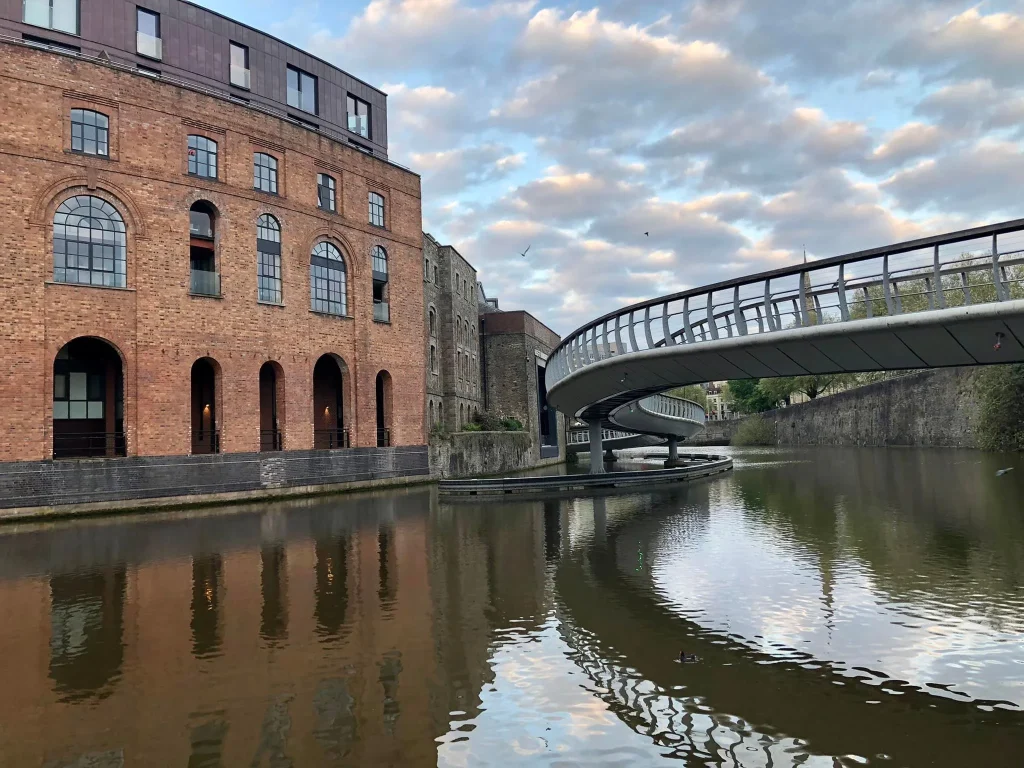
The choir were in full voice as we left the house in the soft morning light. Sparrows, robins, blackbirds, blue tits, and many more that I don’t (yet) have the skilful ear to pick out. One day, hopefully. To our right, the sky lit up pink over the southern tips of the Cotswold Hills as we drove into Bristol – like a giant bowl of Angel Delight. It was 5:30 am and the sun was already peeking out over the horizon. A clear sign that British summertime has arrived, in daylight terms at least. Increasing temperatures are sure to follow but, as I wished Lou goodbye for an hour whilst she took her final PT session before going on maternity leave, the air was crisp and chill. I had already set aside those 60 minutes for a short adventure, a quest to seek out the mouth of the River Frome. Hardly an adventure to rival Livingstone or Speke’s quest for the source of the Nile, but one I’ve been keen to put to bed for some time. I’ve walked and run the length of the Frome on a number of occasions. I’ve picnicked at the very spot where it emerges from the earth – revealing itself as a tiny stream next to an old oak tree on the western escarpment of the Cotswolds in the large Dyson country estate – the trickle of water clear enough to fill your bottle from. I’ve followed it as it meanders Bristol-bound, at times a millpond, a swamp, or a raging whitewater as it crashes this way and that over jumbles of boulders in narrow, steep-sided gorges. I’ve hugged its contours as it rolls into suburbia and through the beauty of our old backyard, before being tamed by mankind in its later stretches. Long abandoned quarries and mills reveal its industrial past but now, foliage grows wild and free, deer quench their thirst in the early morning, herons wade slow-motion in the shallows, and a blur of orange and blue tells you that a kingfisher has just darted its way upstream. As it enters Bristol, humankind’s attempts to tame it are evident. After the beauty of Oldbury Court Estate, Snuff Mills, and Eastville Park, the river oxbows around the edge of Tesco and Ikea before being imprisoned below the concrete pillars of the M32. It reappears again briefly on what was presumably once a little country lane, now a pedestrian and cycle route into the city centre just a stone’s throw from the motorway. It’s here that I pick it up, the coots calling out as they gracefully weave their way in between old trolleys and tyres. Following the route of the river with my eye, I see the office towers of the city bathed in golden light as the sun makes it mark on the world for the first time that day. Or on our bit of the world at least. A short way along the river enters a tunnel underneath the city but the path stays above ground. After crossing the road, I pick up River Street, so I know the waters are still flowing somewhere beneath my feet, imprisoned by a wall of bricks and concrete. At the end of River Street, I cross the usually busy main road, still quiet before the rush hour hum, and enter a deserted Cabot Circus shopping centre. It’s as if I’ve stepped into a zombie apocalypse movie, the only sound and movement from the occaional pigeon or seagull. There’s a strange beauty to this cityscape that’s amplified by the lack of activity. The sharp edges of the towering buildings. The vast quantities of plate glass, still inky black as the sun hasn’t yet penetrated this manmade gorge. The dark glass stands in stark contrast to the bright neon lights of the shop signs that do their job by drawing your eye, although I couldn’t shop if I wanted to as the world is yet to join me in this cathedral of commercialism. I exit the shopping centre, the only sign of life a lone street cleaning cart, whirring away and momentarily breaking the silence. The modern buildings are occasionally interspersed with delightful titbits of history, the architectural joy that is the Klosterhaus cafe, housed in an 18th century Quaker meeting room, and the grand colonial-style almshouse that now houses Jack Wills clothing rather than those in need of shelter. Before long, I’m in the green surroundings of Castle Park and the noise of the street cleaner has faded into the distance. I’ve been here before when I’ve started my Frome River walks and runs, but I’ve never seen its final moments of existence before it ceases to be and its molecules of water are magically transformed in an instant into the River Avon. I wander through the ruins of St Peter’s Church, bombed during the Second World War and now surrounded by a beautifully maintained flower garden with water features and benches that serve as a great spot for quiet contemplation or just a morning coffee. Past the last remaining foundation stones that once formed part of the great castle that once stood here and give the park its name, and the more impressive vaulted chambers tucked away in a corner behind a small green knoll. I know I’m close and I make my way down to the waterside, standing on a pontoon underneath the impressive modern architecture of the serpent-like Castle Bridge, a recent addition to lead pedestrians off into a refurbished industrial quarter now brimming with apartments, micro-breweries, and restaurants. A few more people are appearing now, smartly dressed early starters slowly filing into the surrounding offices. I look for evidence of the river that once acted as one side of the castle moat but all I can see are a few little inlets that seem to go nowhere. Running out of time and thinking that the final few feet of this river that I know so well will once more
We had some great news
We have had some great news It was a drab, grey day in November and I was stood outside an equally drab, grey building waiting to hear from Lou. The building in question was the Royal United Hospital in Bath, and Lou was inside awaiting a scan to see if we had lost our baby. Because of the bloody virus, up and down the country Lou, and other women like her, were having to go through the ordeal of tests like this all alone. All their partners could do was sit outside and wait for news. ‘Had the scan. It’s not the news we wanted I’m afraid.’ I was sat on one of those yellow grit boxes outside the hospital entrance when her text came through. Was the cold, yellow plastic slippery all of a sudden? Or was I just sinking to the floor? Down into the bowels of the Earth, through the tarmac path, through the worms and soil. Dragged deeper and deeper into the damp, dark, underworld of sadness and despair. The rain began to fall. I felt cold and lost. The building looked uglier than ever to me now. Inside that concrete castle somewhere, Lou was sat, alone, having to grieve the loss of our child. She may have been only a few hundred metres away, but it may as well have been eternity. I couldn’t see her, couldn’t reach her, hold her close, and tell her that it was going to be alright. Because that is what this virus has done to people. It has driven a stake through those vital moments in life – of grief and of joy – when people need to be together. That very day Lou and I could have walked into a supermarket together and carried out our weekly grocery shop, but we weren’t able to be together at a time when we really needed to be. If you’re wondering, I don’t blame anyone for this. Certainly not the wonderful doctors, nurses, reception staff, porters, and cleaners within those four walls. Not even the government for their sometimes-nonsensical rules. This has been a time of great uncertainty, of things that have never gone before, of learning as we go, and of doing what we can. I just wish that it hadn’t needed to be that way, that’s all. I hauled myself up from the floor. I had to be strong. Lou would be out soon, and she would need my support. Through the windows above, I could see nurses scurrying by, working hard to help others like they always do, but with added pressure on their own lives. A steady stream of large-bellied ladies headed in and out of the large glass doors, a cruel reminder of appointments we would now not get to experience. Scans that we wouldn’t get to see. Stubby, pink, new-born fingers and toes we would never get to feel. Eventually, Lou emerged through the glass sliding doors, now glistening brightly in the bright sunshine that often follows the rain. But it still felt like a grey day. We held each other and cried, then we climbed into the van and drove away. We had only discovered Lou was pregnant a few days before the end of our long-distance charity bike ride. In fact, it turned out she had cycled half of our trip, around 1,000 miles, whilst pregnant. Her tiredness and breathing challenges made more sense now. We thought it had simply been the difficulties of the challenge, coupled with the ongoing breathing problems she had been experiencing over the past year, and for which she’d been undergoing various tests of her heart. By the time we discovered Lou was pregnant, we’d already made the decision to pause our adventure for the year in a few days’ time anyway. Virus cases were rising across Britain, more local lockdowns were being enforced, and the weather was turning. We knew it was the right decision, but we both hated the fact that we were stopping. We’d set out to complete the challenge, and we didn’t want to give in. Once Lou told me the news though, I was glad we weren’t continuing. I’d been worried enough when I felt responsible for keeping Lou safe. Now I had to make sure I protected her and our unborn child. I considered suggesting we stop straight away, but I knew what she was like and that she would say no. Our plan was to make it through all of the National Parks and National Scenic Areas in Scotland, tipping over the 2,000-mile mark. Exactly halfway towards the total, and meaning that when we did start again in future, we’d be straight back over the border into England for a whole new leg to the adventure. When we rolled into Melrose on that final Friday, I was delighted to have experienced all the things we had over those few months, but more than anything I was relieved that all members of our new family had made it through safely. Of course, we knew from the outset that miscarriages, especially in the first 12 weeks, are common. We’d heard the statistics that one in four pregnancies end in miscarriage. It doesn’t mean you expect it to happen though, and it certainly doesn’t make it any easier to bear when it does occur. You want it so badly that you just hope everything will be ok. You hope that being fit and healthy will increase the chances that everything will be fine. But it doesn’t work like that. And because miscarriage is so common, it’s often considered perceived wisdom not to tell anyone about the pregnancy in the early stages. But as Lou rightly pointed out in the days after we’d lost Squidge (this was as far as we’d got in the naming process), when you do lose a baby, you then have two pieces of news to tell people – you did have some great news, but very sadly now you
Seven amazing things we’re taking you to see next year
If you didn’t see it, yesterday I posted a sneak preview of all of the events we have planned for next year. One of the things we pride ourselves on is taking you to see beautiful views, places that inspire awe and wonder. Sometimes, they’re miles from anywhere, but at others, they’re literally on your doorstep and you may pass them daily without giving them a second glance. We’ve got so much lined up for you, here’s a glimpse of what’s in store… 1) Castles and fortresses We’ll cross Offa’s Dyke, the 50-mile long earthwork defence built by the Mercian king of the same name, at both its southern and central points, giving you amazing views and a good sense of how powerful his kingdom was over 1,200 years ago. We’ll also pass fortresses and residences in various states of repair, from castellated stately homes like Cyfartha Castle in the valleys of Wales, to grand but well preserved ruins like those at Chepstow, towering above the Wye as it does, right through to those now clinging on to their few remaining stones like Montgomery and Newport Castles, but no less impressive for it. Chepstow Castle’s grand entrance 2) Places of worship As well as castles, you’ll get to see how religion has shaped our lands for centuries, from Wells cathedral, making the city the smallest in England, to neighbouring Glastonbury Tor, fabled for its connections to Arthurian and Grail legend. Have lunch next to Tintern Abbey, a once great and powerful monastery sitting on the banks of the Wye and many others besides. The imposing ruins of Tintern Abbey, 3) Hills and mountains Cheddar Gorge feels almost prehistoric with its steep-sided cliffs and forested sides; you still wouldn’t be surprised if you saw dinosaurs roaming as you pedal through, whilst Cranborne Chase with its chalky down hills lets you know for sure that you’re on England’s southern slopes. Further north you can enjoy the dramatic nature of the Brecons, passing alongside Pen y Fan, the highest point in southern Britain, or the even more imposing figure of Cadair Idris in Snowdonia National Park as you cycle the valley floor below alongside a dark and mysterious lake. Climb atop the Cambrian Mountains on a road so peaceful you’d almost think civilisation had ceased to exist, or back in England, enjoy the sharp, cragged rocks of the Stiperstones or the 360-degree views from the Long Mynd, both found in the Shropshire Hills. About to descend the Cambrian Mountains, Snowdonia in the distance 4) Lakes and reservoirs Chew Valley & Blagdon Lakes, both at the foot of the Mendip Hills Area of Natural Beauty kick us off on our first ride of the year, the former a peaceful spot where you can watch boats sailing as you enjoy fish and chips from the fashionable Salt & Malt restaurant, and there’s plenty more to come with Pontiscill and Talybont Reservoirs nestled between the high peaks of the Brecons, or my absolute favourite, the Elan Valley, a series of reservoirs in mid-Wales that have an almost ‘moon-scape’ feel at the top but that give way to Alpine-like descents along winding roads through thick forests. The reservoirs of the Brecon Beacons 5. Rivers and seas Follow the Wye Valley high above the river on our half-marathon walk and catch glimpses of the Severn Bridges beyond as the water makes its way out into the Severn Estuary, Bristol Channel and Atlantic Ocean beyond. You’ll also get the chance to ride at the very opposite end of the rivers Severn and Wye, through the mountains from which they first begin their journey and not far away ride alongside the picturesque Dyfi estuary looking out into St George’s Channel and the Irish Sea beyond. Enjoy the prehistoric feel of the The Avon Gorge from on high, not far from where one of the first dinosaurs on British soil was discovered, and follow it upstream through cities, villages, parks, meadows and forests, or join us as we cycle along the River Taff, the waterway that gave the Welsh people their overly used nickname. Cycling the Dyfi estuary 6. Towns and cities Pass through major places of heritage and history, from Bristol’s harbour-side, once the second most important port in the country after London, to Bath and its famous abbey and Roman spa, or smaller cities like Wells and Glastonbury, rich in history and the latter now a centre for free-thinkers due to its links with myths, legends and a certain music festival. At the other end of the scale, we experience smaller market towns like Brecon and Machynlleth, little fishing ports like Aberdovey, the village of Cheddar, a tourist-heaven famed for its caves and cheese, or Shaftesbury, which whilst sitting in the heart of southern England, has a famous cobbled hill once used by Hovis in an advert for their bread supposedly set in northern England. Even more bizarrely, the advert was directed by Ridley Scott!


